Back

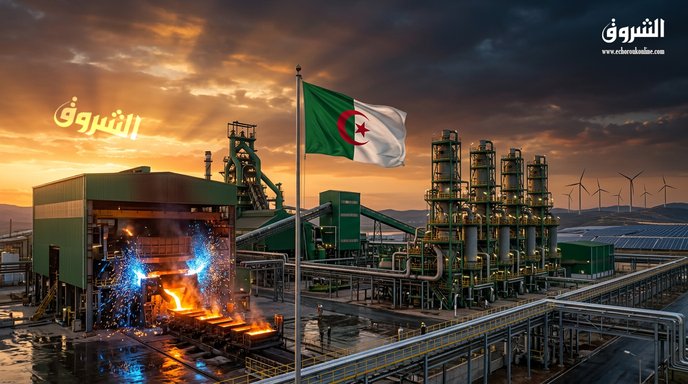
Algeria is the second largest regional player in the direct reduced iron industry

May 18, 2026اقتصاد – الشروق أونلاينechoroukonline.comTranslated from Arabic
Algeria is the second largest regional player in the direct reduced iron industry

Algeria is advancing in the development of direct reduced iron within the Middle East and North Africa region, through projects with a capacity of about 5 million tons annually, enhancing its position among the countries most contributing to the transition towards low-emission steel production, according to a report by Global Energy Monitor, reviewed by the Energy Research Unit. The report ranks Algeria second regionally in direct reduced iron expansions, behind Libya, which leads the scene with a capacity of 11 million tons annually, while Egypt comes in third with about 3 million tons annually, amid a clear acceleration in the development of this type of industry in the region. Read the full content on الشروق أونلاين.

Share on social media

Related Articles

APS | تجارة وخدمات

Delegation of State Property Representatives to Sign Economic Land Lease Contracts

Algeria - The process of expanding the powers of public administration representatives at the one-stop shops of the Algerian Investment Promotion Agency continues, through the delegation of State Property Administration representatives to prepare and sign lease contracts for economic land, as part of simplifying administrative procedures and accelerating the realization of investment projects.

Jul 19, 2026aps.dz
12 thousand and 700 billion in outstanding compensation!

12 thousand and 700 billion in outstanding compensation!

Most homes and farms are not insured against fires; farmers are the most exposed to losses due to weak subscription. New insurance products to face climate disasters, digitization, and artificial intelligence to reduce compensation times. Hassen Khalifati, a member of the board of the Algerian Union of Insurance and Reinsurance Companies, warned that the expansion of fires in Algeria, due to heat waves and climate changes, is met with a clear weakness in the demand for fire insurance, which increases the losses incurred by families, farmers, and economic institutions when disasters occur. Khalifati explained, in a statement to 'Echorouk', that there are no accurate and updated statistics to determine the percentage of homes or farms...

Jul 19, 2026echoroukonline.com

News Disclaimer: Articles are curated from third-party sources for informational purposes. We do not verify or endorse the accuracy of third-party content.