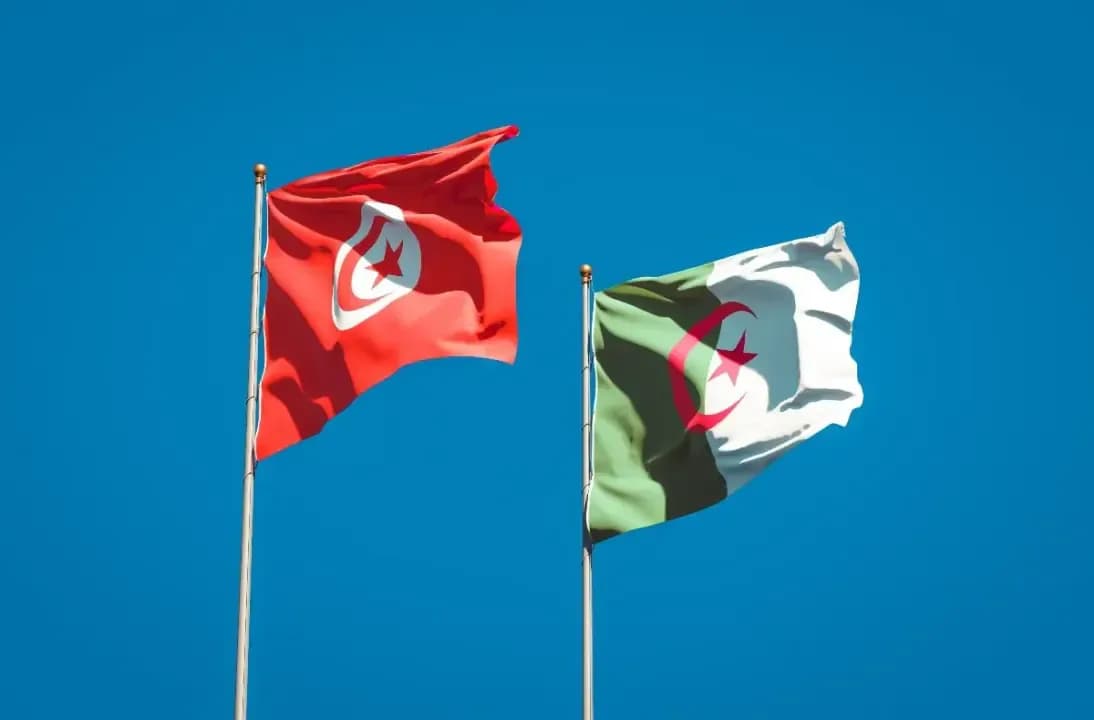
Tunisian companies in Algiers: Securing new contracts
On a mission in Algiers, Tunisian companies aim for subcontracting and investment to diversify rapidly increasing exchanges.
Sep 23, 2026 ecotimesdz.com
Small and medium enterprises, local business developments
On a mission in Algiers, Tunisian companies aim for subcontracting and investment to diversify rapidly increasing exchanges.
ecotimesdz.com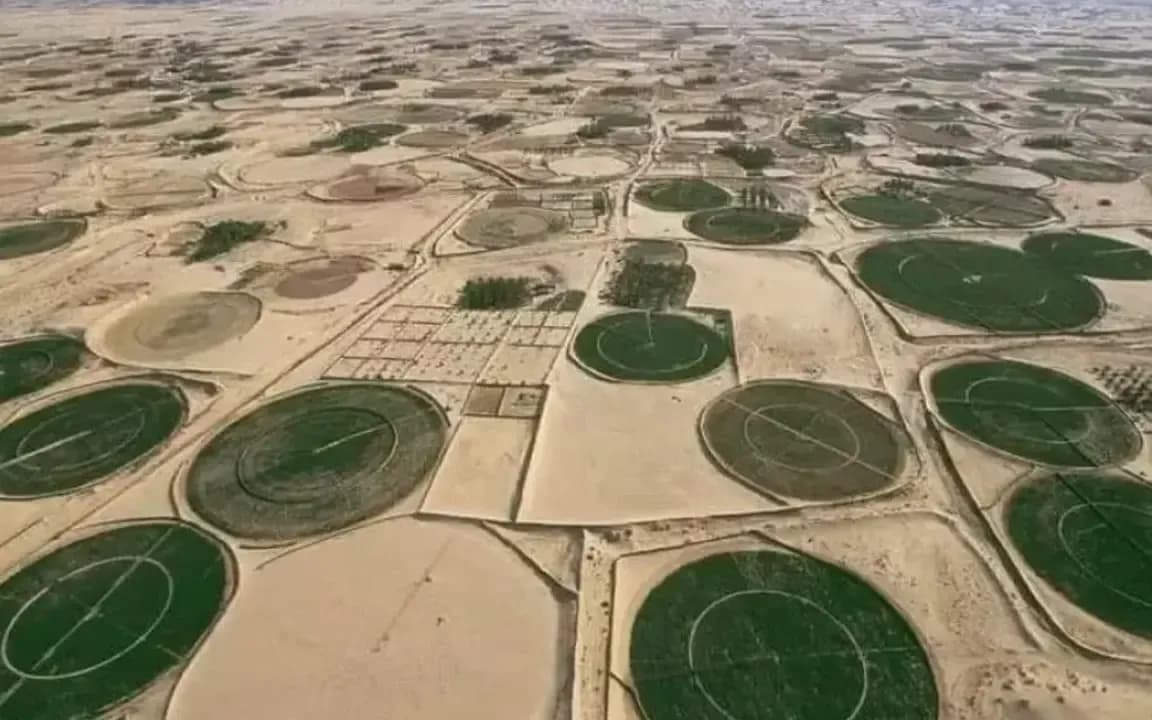
From the $3.5 billion Baladna dairy megaproject to the Foggara complex, Adrar is accelerating its economic diversification. The transforming Saharan model.
ecotimesdz.com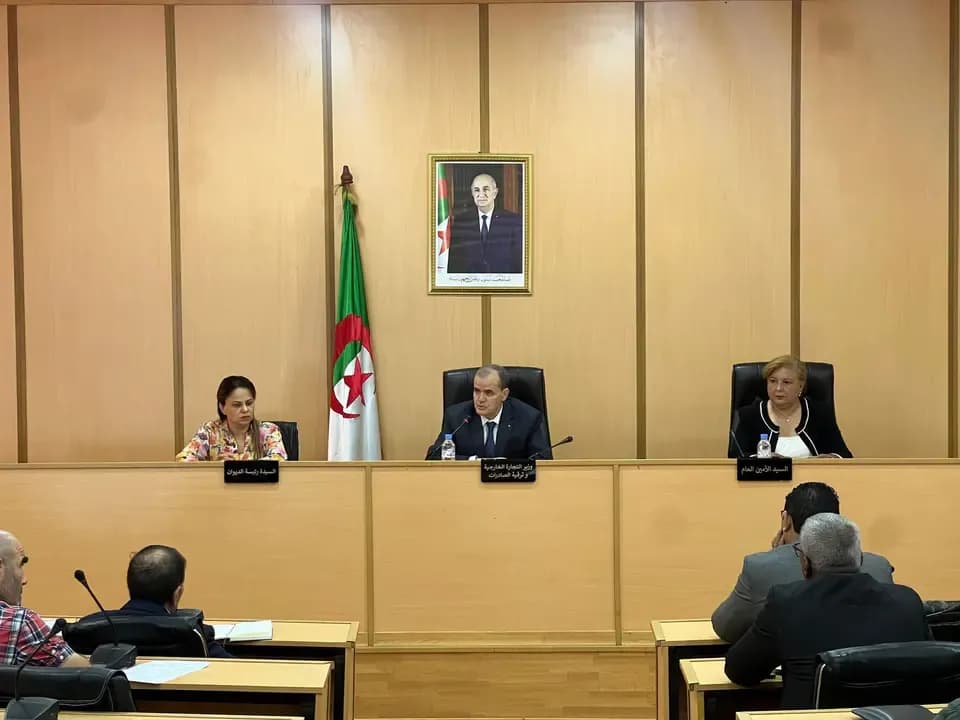
Algeria - The Minister of Foreign Trade and Export Promotion, Kamel Rzig, chaired a working meeting today, Tuesday, in Algiers, with economic operators who are single-brand representatives of global brands in the clothing and footwear sector, which was dedicated to reviewing local production indicators and prospects for its development, according to a statement from the ministry.
 aps.dz
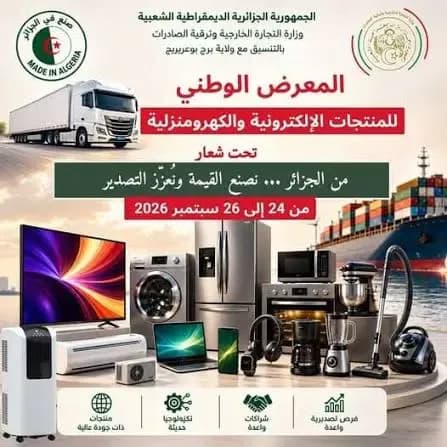
Algeria - The Ministry of Foreign Trade and Export Promotion is organizing the National Exhibition of Electronic and Home Appliances Products in Bordj Bou Arreridj from September 24 to 26, as stated in a statement from the ministry today, Tuesday.
aps.dz
On Tuesday, the Minister of Foreign Trade and Export Promotion, Kamel Rzig, chaired a working meeting with economic operators representing global clothing and footwear brands in Algeria. The meeting reviewed local production indicators recorded during the first half of the current year, along with the production and export capacities achieved during this period, and prospects for their development. Watch the full content on Echourouk Online.
 echoroukonline.com
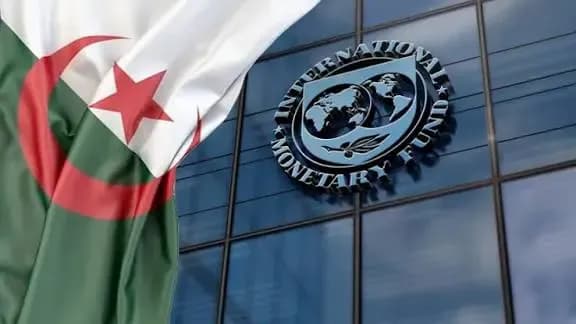
The International Monetary Fund praised the strong growth of the Algerian economy and its diversification efforts, expecting real GDP growth of 3.8 percent in 2026, after rising from 3.7 percent in 2024 to 3.9 percent in 2025, driven by increased investments. The Fund noted in its latest report on Algeria that the non-hydrocarbon sector's growth reached 4.3 percent in 2025, expecting it to exceed 4 percent in 2026, amid ongoing efforts to diversify the economy and support investment activity. Read the full content on Echourouk Online.
echoroukonline.com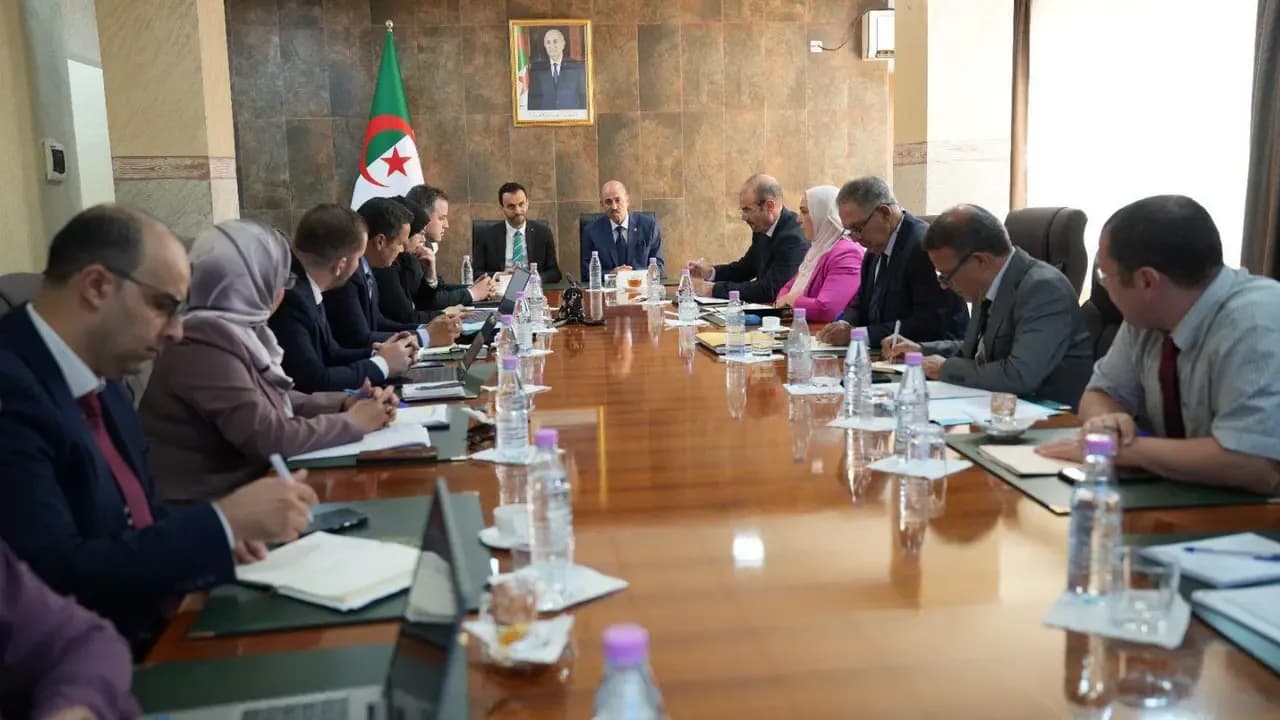
The sectors of industry and knowledge economy, along with startups and micro-enterprises, agreed yesterday, Monday, to form a joint committee to enhance coordination and develop cooperation mechanisms, focusing on integrating micro and startup enterprises into the industrial and economic fabric and supporting innovative projects related to the industrial sector. The agreement came during a working meeting chaired by the Minister of Industry, Fred Kourtel, alongside the Minister of Knowledge Economy, Startups, and Micro-Enterprises, Nourredine Wahid, at the Ministry of Industry, in the presence of officials from both sectors, according to a statement from the Ministry of Industry.
echoroukonline.com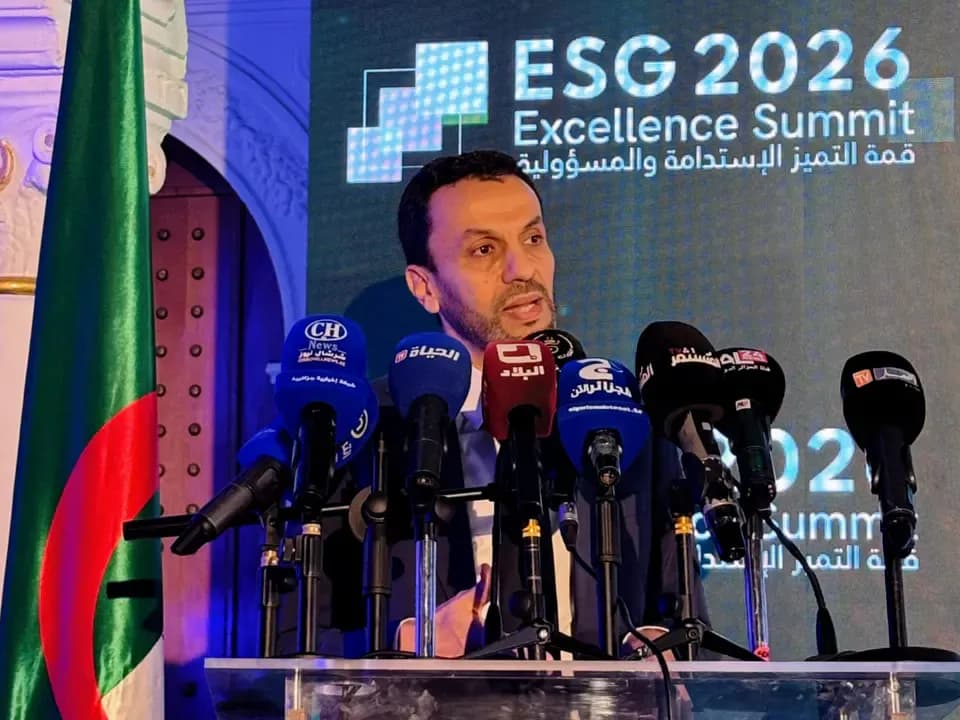
The Minister of Knowledge Economy, Startups, and Small Enterprises, Nourredine Ouahd, highlighted today in Algiers the importance of innovation in enhancing the competitiveness of enterprises and supporting their sustainability by developing solutions, products, and working methods that consider environmental, social, and governance dimensions.
 radioalgerie.dz
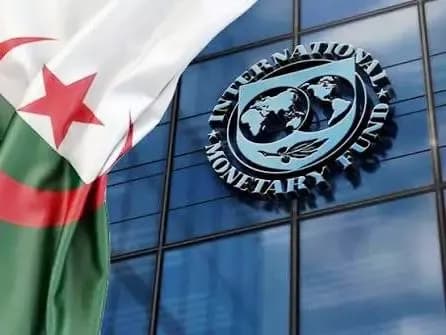
The International Monetary Fund praised the resilience of the Algerian economy, driven mainly by the strong growth recorded in 2025, as well as the efforts of the authorities in the field of economic diversification, highlighting at the same time the positive prospects in the short term.
radioalgerie.dz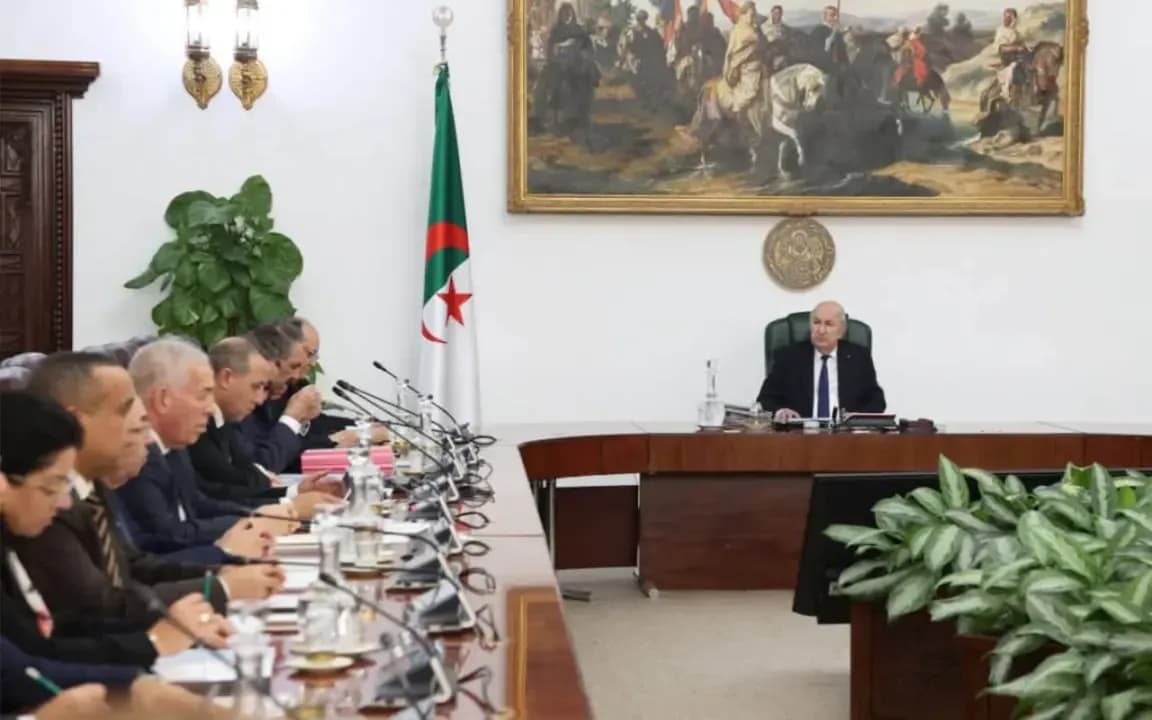
Considered a driver of economic diversification, agriculture will soon be equipped with a new orientation law.
ecotimesdz.com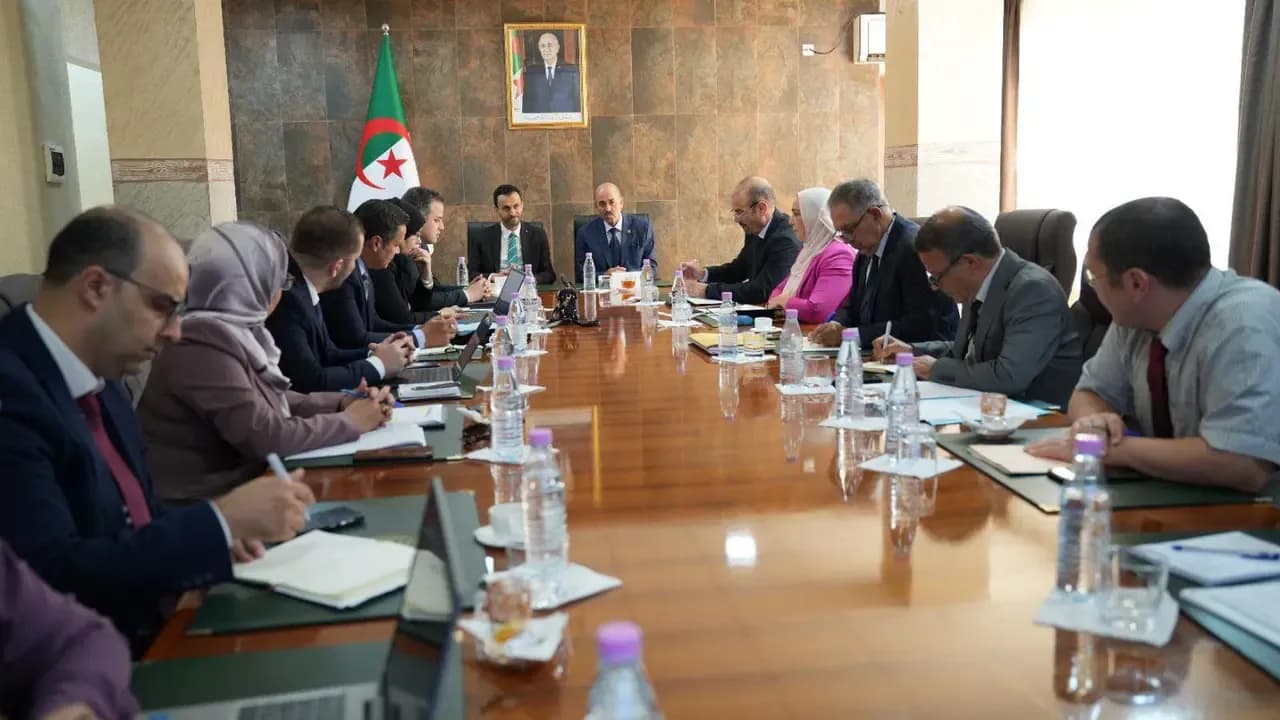
Algeria - The Minister of Industry, Fred Kourtel, along with the Minister of Knowledge Economy, Startups, and Small Enterprises, Nourredine Wahid, chaired a working meeting today, Monday, during which an agreement was reached to form a joint committee between the two sectors to enhance coordination and develop mechanisms for joint cooperation, according to a statement from the Ministry of Industry.
aps.dz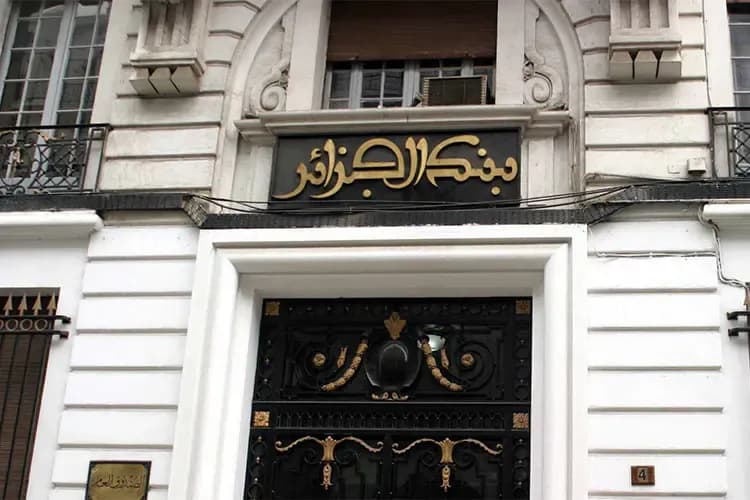
Banks are required to report to the 'Risk Central' and the factoring transfers rights and guarantees to the intermediary, preventing the factoring of debts subject to mortgage or assignment or any guarantee that affects the rights of the intermediary. The Bank of Algeria has defined, through a new system, the conditions for banks and financial institutions to practice factoring and the procedures for this process, which involves the institution transferring its commercial debts owed by its clients to a bank or financial institution, in exchange for receiving their value immediately, with the intermediary bearing the risk of non-payment. The system aims to define the conditions for banks and financial institutions to practice factoring and the procedures for its operation, considering factoring as a process carried out within the framework of a written agreement with a substitutive effect.
echoroukonline.com