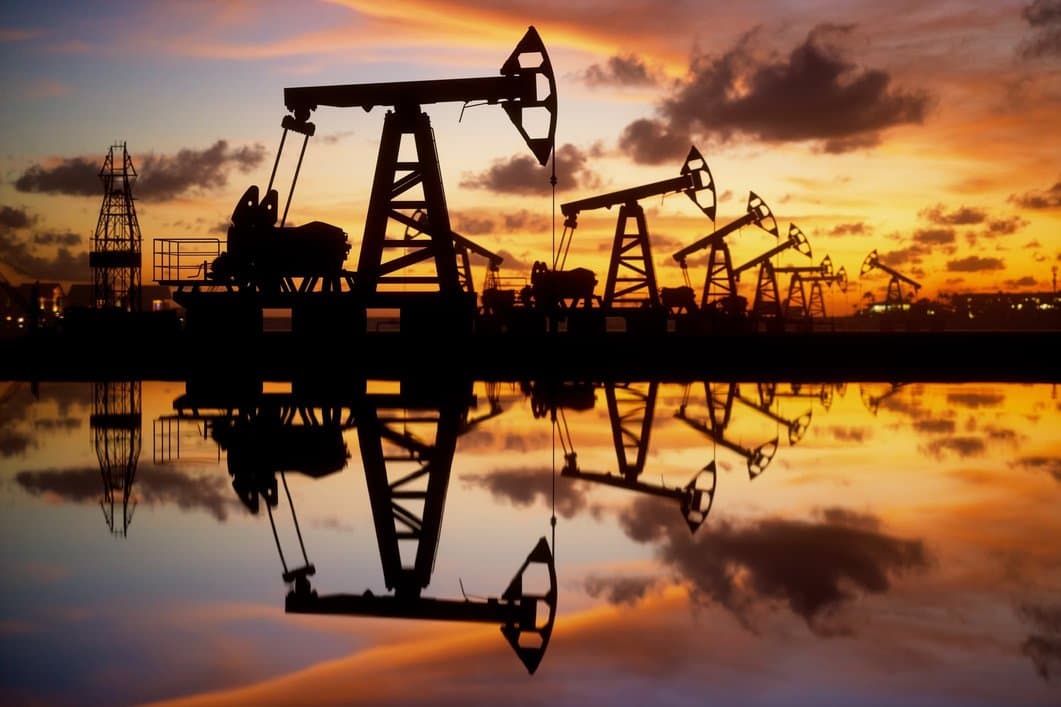
Iranian Oil Company Takes Measures to Reduce Oil Product Reserves - Iqtissad Al Balad
Economy Dz aliqtissad dz Algeria Economy News
Mar 9, 2026 iqtissadalbalad.dz
Import/export, trade agreements, customs, and international commerce
Economy Dz aliqtissad dz Algeria Economy News
iqtissadalbalad.dz
The economy of Algeria news
iqtissadalbalad.dz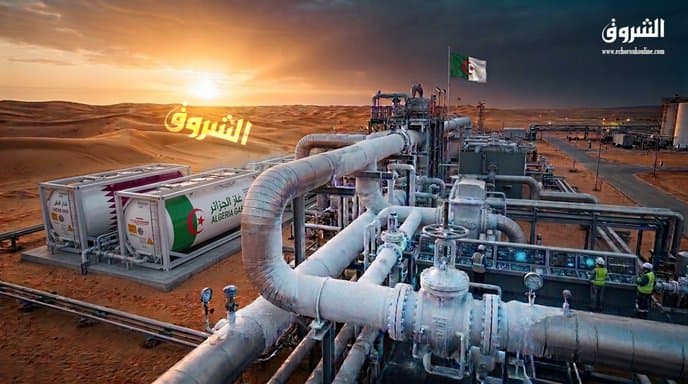
Algeria emerges as the most suitable alternative to secure helium supplies to global markets, following the halt of liquefied natural gas production in Qatar due to the American-Zionist war against Iran. According to data from the Energy Research Platform, Algeria's annual helium production capacity is about 50 million cubic meters, making it the third largest producer after the United States (194 million cubic meters) and Qatar (72 million cubic meters). Read the full content on الشروق أونلاين.
 echoroukonline.com
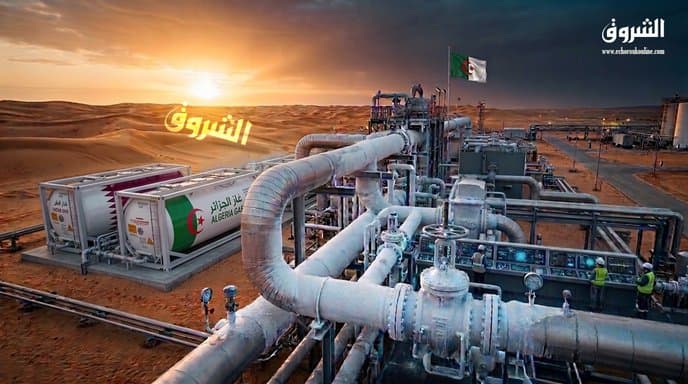
Algeria emerges as the most suitable alternative to secure helium supplies to global markets, following the halt of liquefied gas production in Qatar due to the American-Zionist war against Iran. According to data from the Energy Research Platform, Algeria's annual helium production capacity is about 50 million cubic meters, making it the third largest producer after the United States (194 million cubic meters) and Qatar (72 million cubic meters). Read the full content on الشروق أونلاين
echoroukonline.com
As most forecasts indicated, the war in the Middle East surged oil prices to nearly $120 a barrel for the first time in three years after its first week, prompting some countries to take measures that may help mitigate the war's impact on oil supplies, especially in Europe, amid fears of a greater impact if the conflict prolongs...
 al24news.dz
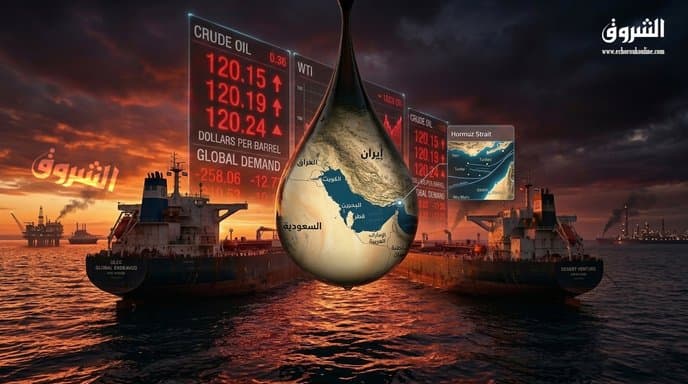
Oil prices surged by more than 25 percent to reach their highest levels since mid-2022, with Brent crude futures rising by about $24.96, or 27 percent, to $117.65 per barrel, while West Texas Intermediate crude increased by $25.72, or 28.3 percent, to $116.62 per barrel, marking the largest daily price jump ever. According to trading data, West Texas Intermediate crude rose by 31.4 percent, hitting a session high of $119.48 per barrel, while Brent crude reached $119.50, up 29 percent. This increase follows strong gains last week, with Brent crude rising by 27 percent, while WTI jumped...
echoroukonline.com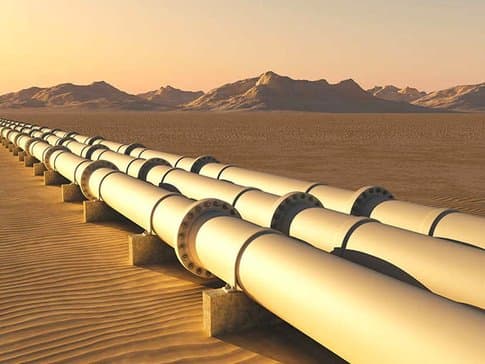
The Organization of the African Petroleum Producing Countries highlighted the importance of the Trans-Saharan Gas Pipeline (TSGP) project, which connects Nigeria to Algeria via Niger, as a structural project that will enhance the continent's position as a key player in the balance of the global market.
 radioalgerie.dz

The Algerian Agency for Investment Promotion called on Algerian economic operators active in the food industries sector to participate in the international food exhibition 'SIAL Canada 2026', scheduled to be held from April 29 to May 1, 2026, in Montreal (Canada), with the aim of exploring trends.
radioalgerie.dz
Just a week after the start of the war on Iran.
 elkhabar.com
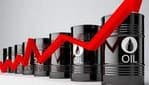
Crude oil prices have surpassed the $100 per barrel mark for the first time in over three and a half years. The price of Brent crude reached $101.19 shortly after trading resumed on the Chicago Mercantile Exchange, up 9.2 percent from last Friday's closing price of $92.69. West Texas Intermediate crude was sold at $107.06 per barrel, a 16.2 percent increase from last Friday's closing price of $90.90.
radioalgerie.dz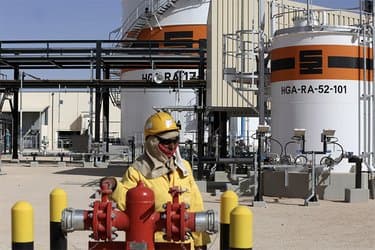
An 18% increase in oil revenues and a 3% rise in gross domestic product. The crisis will accelerate the trans-Saharan gas pipeline, with operations expected to start in 2029. The success of diversifying Europe's supplies depends on African gas lines. The African Petroleum Producers Organization (APPO) outlined the aspects from which Algeria and several African countries can benefit due to the ongoing war in the Middle East and the closure of the Strait of Hormuz, one of the most important fossil energy corridors in the world, where an increase in Algeria's oil revenues by about 18% and a rise in gross domestic product by three percentage points are expected, in addition to accelerating the implementation of the trans-Saharan gas pipeline project between Algeria and Nigeria via Niger due to the current crisis.
echoroukonline.com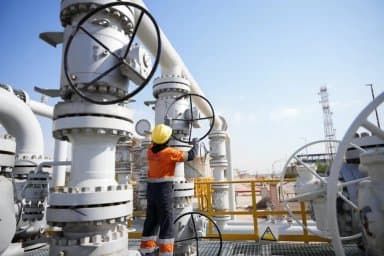
Iraq's oil production has dropped to about 1.3 million barrels per day, compared to about 3.3 million barrels per day before the military escalation in the Gulf region, according to the Iraqi Ministry of Oil on Sunday. Kazem Abdul Hassan Karim, assistant director general of the ministry's fields and licensing affairs company, stated in a statement reported by the ministry that production has currently stabilized at …
al24news.dz